
Children’s Sand Tray Therapy
Helping Children Process Emotions, Heal from Distress, and Express Inner Worlds Through Creative, Evidence-Based Sand Tray Therapy.
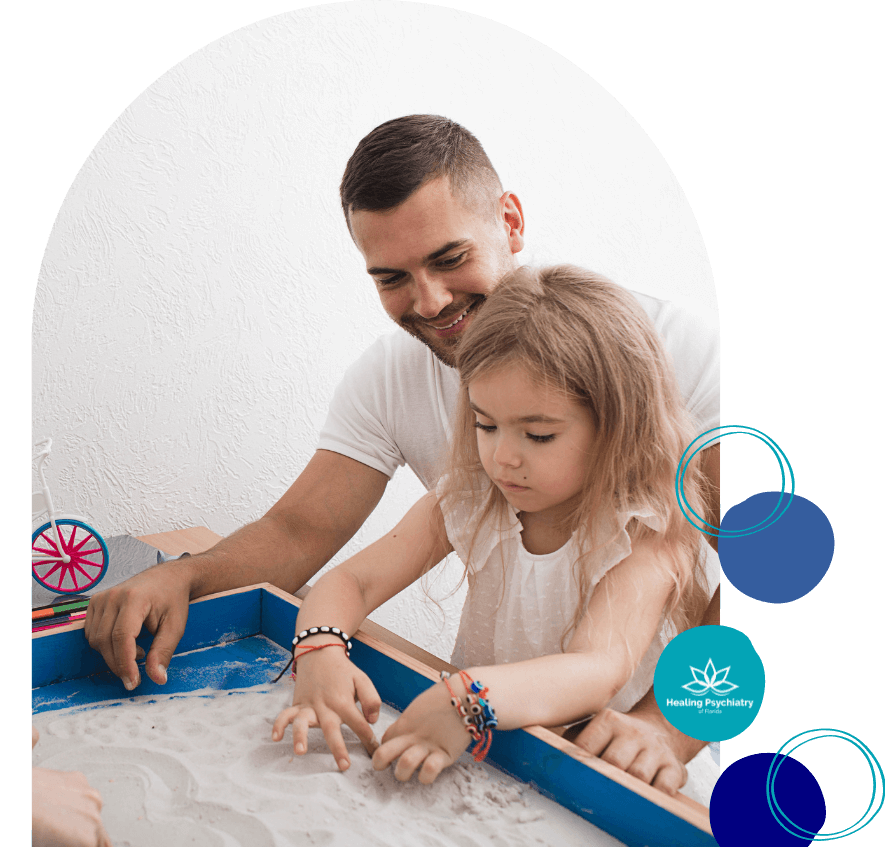
Some children don’t respond to talk therapy. Others can’t yet explain what’s going on inside. For kids dealing with anxiety, psychological distress, or past trauma, talk often isn’t enough. That’s where children’s sand tray therapy offers a different path. In a quiet room, using a tray of sand, miniature toys, and open-ended play, the child begins to build stories, scenes, or worlds that reflect their feelings. These sessions give them the tools to express what they can’t yet put into words—using imagination, symbols, and safe, creative materials.
At Healing Psychiatry of Florida, we offer sand tray therapy as part of our trauma-informed, evidence-based care for children ages 5 and up. This method draws from play therapy, sand play therapy, and developmental psychology to create an experience where the therapist observes, supports, and gently reflects.


Start Your Session Today
What Is Children’s Sand Tray Therapy?
Children’s sand tray therapy is a form of play therapy where a child uses a shallow tray filled with sand and a collection of miniature objects—figures, animals, buildings, vehicles—to build symbolic scenes. This is based on the world technique, a method grounded in child psychology and supported by a strong evidence base. The therapist doesn’t lead or interpret too quickly; instead, the child is free to create, arrange, and explore. Over time, the objects, emotions, and interactions that surface in the tray help the therapist understand the child’s internal world—especially when traditional talk or other types of therapy haven’t worked.
Why Sand Tray Therapy Is Effective for Nonverbal or Shut-Down Kids
Sand tray therapy gives children who are overwhelmed, withdrawn, or emotionally shut down a way to speak without words. Instead of forcing communication, this approach invites imaginary play and scene-building, helping the therapist observe patterns and emotional themes. For children struggling with trauma, anxiety, or school-related behavior issues, this is often a more effective way to access and begin healing core experiences—especially when talk therapy has hit a wall.
A Developmentally Appropriate Way to Process Emotions
When a child sits at a sand tray, they aren’t asked to explain what they feel—they’re invited to show it. Through miniature toys, play, and symbolic arrangement, children begin to express, represent, and reflect on what’s hard to say. Whether reenacting a family dynamic or constructing a fantasy rescue scene, this creative approach builds emotional safety, self-awareness, and supports real treatment for underlying emotional or behavioral concerns.
A Safe, Non-Threatening Space to Reflect and Rehearse
Sand play therapy creates a safe environment for a child to revisit or reimagine experiences they may not fully understand. Whether a person is placed alone, a conflict is acted out, or a scene is left unfinished, the therapist watches for symbolism that speaks to the child’s emotional world. It’s especially helpful for working through family members’ roles, fears about school, or unprocessed life events. What happens in the tray often mirrors what the child feels—but can’t yet say.
Insurances Accepted


See what others are saying about Healing Psychiatry of Florida
Meet Our Children’s Sand Tray Therapy Team
Our licensed child therapists specialize in sand tray therapy, play therapy, and other evidence-based approaches for children ages 5 and up. With advanced training in trauma-informed care and creative methods like art therapy and sand play therapy, we provide a safe environment where children can express complex feelings, build emotional insight, and begin the process of healing. Every session is tailored to your child’s emotional needs and grounded in real clinical research.



How the Tray and Miniatures Work in a Play Therapy Session
During a play therapy session with the sand tray, the client chooses from a wide range of miniature toys to build scenes that feel personal or emotionally relevant. A child may construct a battle, a peaceful town, or a family of animals in distress. These scenes unfold in real time, and while the therapist supports without leading, they are actively noticing themes, choices, and patterns. This open format encourages creativity, emotional projection, and a sense of safety in the act of creation itself.
Common Themes Children Explore Through Symbolic Worlds
In sand tray therapy, children often explore themes like danger, rescue, isolation, protection, or power. For example, a child may bury objects in the sand to represent hidden feelings, or separate figures across a barrier to symbolize conflict. These story-worlds allow the child to explore difficult emotions safely while offering the therapist valuable insight into how the child sees their world. These symbolic scenes often mirror concerns from school, family, or past experiences.

Why Sand Tray Therapy Supports Long-Term Emotional Change
Because sand play therapy is nonverbal, sensory-based, and child-led, it can gently access and shift internal narratives that other therapeutic techniques may not reach. The process builds self-awareness, invites safe risk-taking, and allows the child to experiment with new roles and outcomes. Over time, these sessions reduce symptoms, increase emotional vocabulary, and lay the foundation for lasting behavior change—making it one of the most helpful and developmentally aligned therapies for children.
FAQs for Our Children’s Sand Tray Therapy
Can sand tray therapy support what my child’s already doing in additional counseling (i.e., school, ABA therapy, family therapy)?
Yes. Sand tray therapy can complement other services well and be an added benefit. When a child is struggling with external factors within the school, community, and/or home setting, the symbolic expression used in the tray often reveals what’s driving their behavior beneath the surface.
What can my child actually learn from sand tray therapy?
In sand tray therapy, the child learns more than just how to play—they learn how to reflect, feel, and communicate in new ways. They begin to understand emotional cause and effect, practice decision-making, and rehearse social problem-solving using symbolic story-building. These experiences help them gain awareness, reduce internal stress, and build emotional tools they can carry back into real-life settings.
What kinds of issues can sand tray therapy help treat?
How do you support emotional resilience in kids who are extremely withdrawn?
Building emotional resilience starts by creating an emotionally safe space for children to feel seen, understood, and accepted. Through art therapy, sand tray therapy, and quiet symbolic work like pretend play, withdrawn children receive emotional support without performance demands. These methods help rebuild trust and develop internal skills like coping strategies and child’s confidence, all of which support long-term growth.
What are the benefits of sand tray therapy compared to other forms of play therapy?
One of the key benefits of sand tray therapy is how quickly it builds safety and emotional insight without needing verbal explanation. For some children, it’s the first time their inner world has been “seen” and supported without judgment. Because the scenes are entirely child-led, it encourages autonomy, creativity, and genuine emotional release—especially useful when children are stuck or resistant in other forms of therapy.
Is there research or theory that supports how sand tray therapy works?
Yes. Sand tray therapy is grounded in psychological theory and supported by decades of research in child development, trauma response, and symbolic communication. It draws from Jungian, Adlerian, and cognitive-behavioral frameworks—all pointing to the effectiveness of using metaphor and symbolic play as a tool for healing and insight. It’s not just creative—it’s clinically supported and developmentally appropriate.
Can sand tray therapy be done in group settings too?
Yes, group sand tray therapy exists, though it’s less common for younger children due to the individual nature of emotional processing. That said, shared trays in small groups can encourage teamwork, communication, and problem-solving in therapeutic settings. At our clinic, we focus on individual sand tray work to ensure the child’s emotional needs are fully supported, but the approach can be adapted to group formats in some programs.
How do therapists use sand tray ideas to track emotional progress over time?
Each child’s tray is a reflection of their internal world—and the ideas they place inside it matter. Over time, therapists notice shifts: a once-isolated figure moves closer to others, or a repeated danger theme is replaced by safety. Compared to other techniques that rely on charts or direct feedback, the sand tray offers a subtle, visual way to monitor growth. We help parents answer questions about these changes by sharing observable patterns—without adult interpretations that might miss what the child is truly communicating.
Ready to Take the Next Step?
Your child’s challenges are real—and so is the path forward. Whether it’s focus, behavior, or emotional regulation, early support can make a measurable difference in your child’s mental health and your family’s day-to-day life. We’re here to help you build a plan that works.

Contact us
For more information about our systems and services, contact Healing Psychiatry of Florida.
Healing Psychiatry of Florida
108 W Citrus St, Altamonte Springs, FL 32714
help@healingpsychiatryflorida.com
Opening Hours
Monday – Thursday: 8AM – 7PM
Friday: 8AM – 5PM
Saturday: Closed
Sunday: Closed
OCD Therapy Altamonte Springs, FL